Hercules Globular Cluster
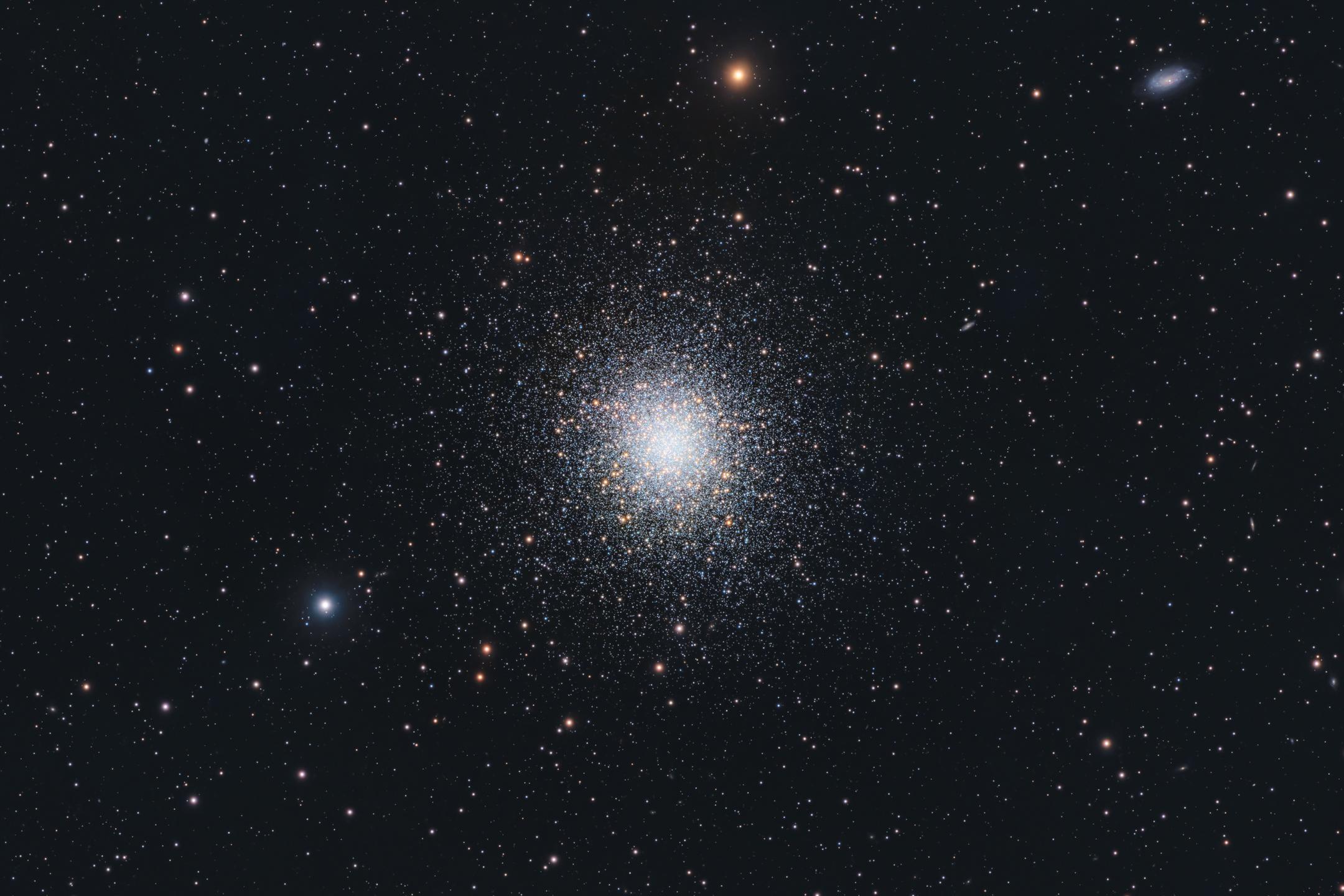
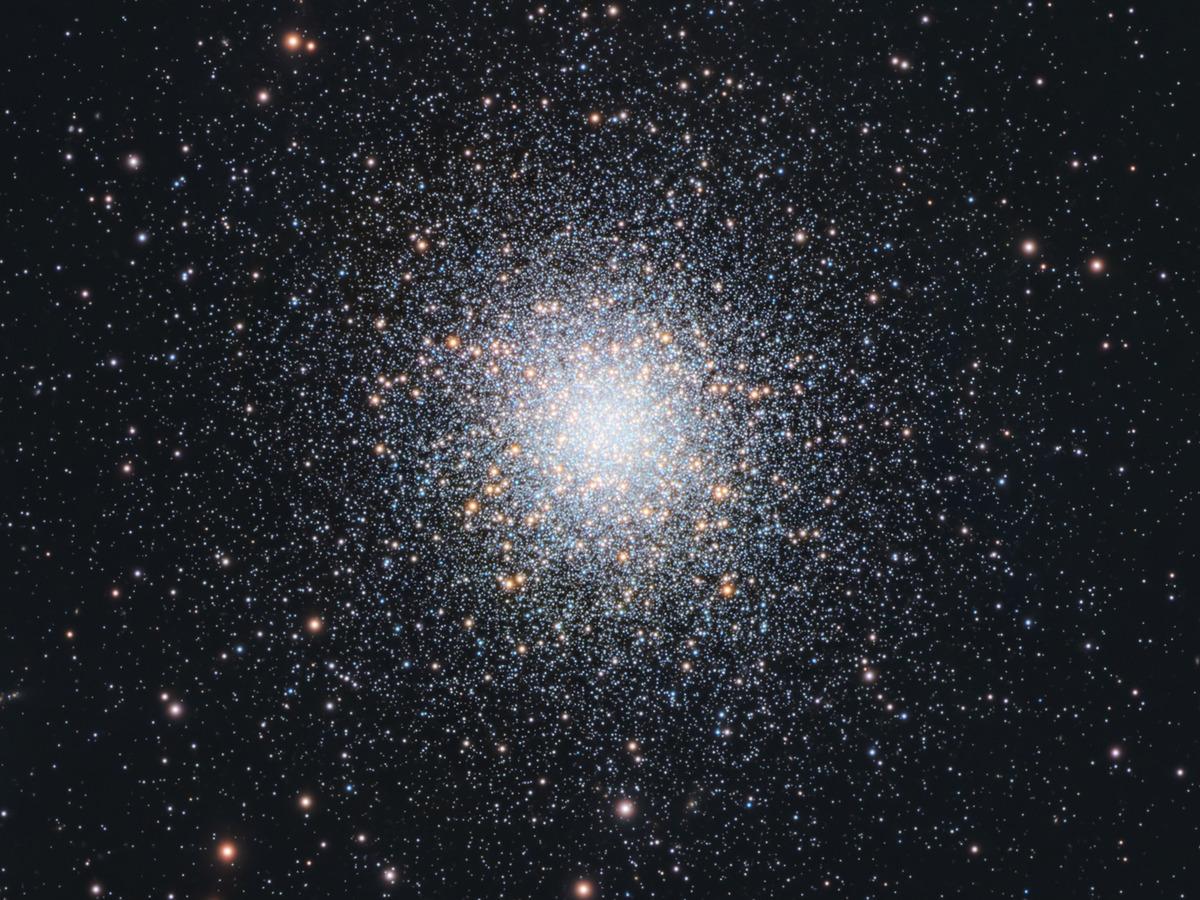
A detailed LRGB capture of M13, preserving the dense stellar core while maintaining separation and subtle colour throughout the cluster.


The object
M13 is one of the oldest globular clusters in the Milky Way, containing several hundred thousand stars compressed into a remarkably compact volume. Despite being one of the most frequently imaged deep-sky objects, it remains difficult to ignore.
Its appeal comes from the extraordinary concentration of stars towards the centre and the gradual transition into a looser outer halo, creating a natural balance between density and structure.
Capture notes
Most of the dataset was acquired over several nights close to the full Moon, partly as an experiment to see how well a globular cluster would tolerate brighter conditions. The result confirmed that clusters are considerably more forgiving than many emission targets.
Processing
Processing focused on preserving stellar separation within the densely populated core while maintaining the natural fall-off towards the outer regions. Subtle colour differences between stars were retained without allowing saturation to dominate the image.