M39 - Pyramid Cluster
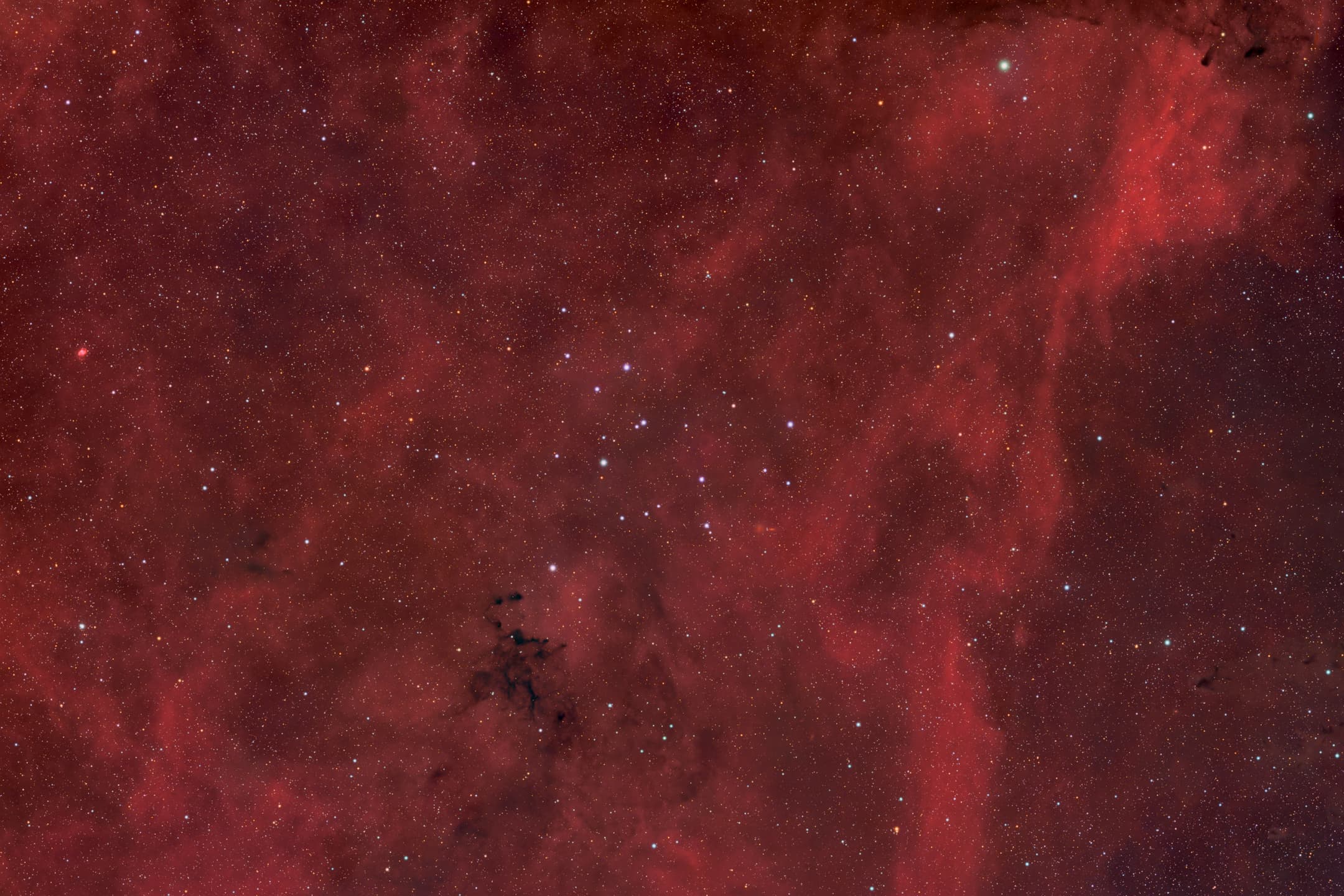
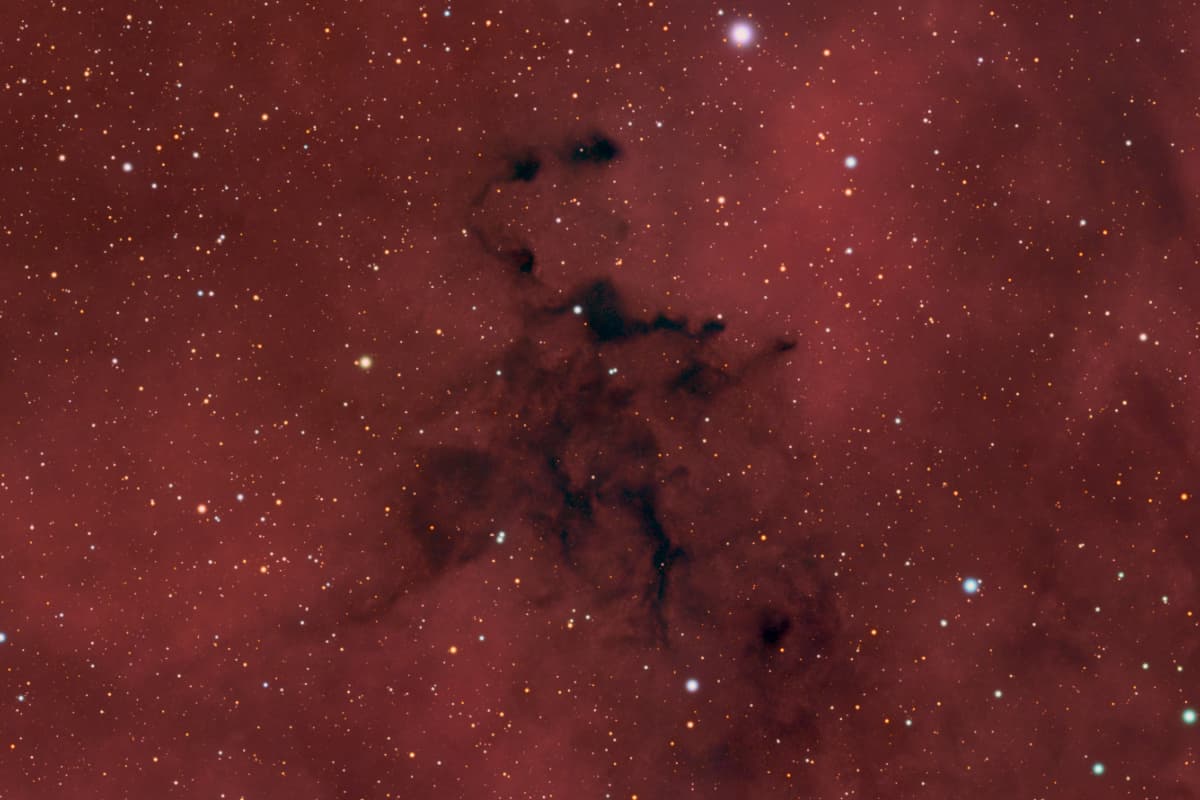
An LRGB and Hα view of M39 in Cygnus, shot entirely under a bright Moon. The hydrogen gives the cluster a deep red field to sit in, with LDN 1012 just beside it.


The object
M39 is a loose open cluster in Cygnus, about a thousand light-years away and close to 280 million years old. It's roughly the size of the full Moon and bright enough for binoculars, which is how most people meet it: a couple of dozen blue-white stars in a rough triangle. Hence the pyramid.
On its own it's a sparse subject. A few bright stars, a lot of Milky Way, and not much to hold them together. The cluster has no nebulosity of its own, but the field around it is full of hydrogen, and that's what this image is really about.
Just beside the cluster sits LDN 1012, a small dark nebula. It's a knot of dust with thin lanes branching out of it, and it's only visible as a silhouette, where it blocks the red glow behind it.
Capture notes
Shot between July and September, with every frame taken close to full Moon, on nights above 80% illumination. Those nights would otherwise go unused, and clusters are forgiving enough to take them. M13 was the first test of that; this is the same idea with twelve hours of Hα added on top.
A 6nm Hα filter is also fairly indifferent to moonlight, so the whole dataset comes from time that wasn't good for much else.
Processing
The Hα goes into both the red channel and the luminance, so the hydrogen adds structure as well as colour. The job was getting it to carry the field without tinting the cluster, so the stars stay blue-white and the red stays around them.
The nebulosity is faint and fairly even, and it's easy to stretch it into a flat red wall. It's held back enough that the brighter curtains on the right and the dust in LDN 1012 still read as structure.