Great Orion Nebula
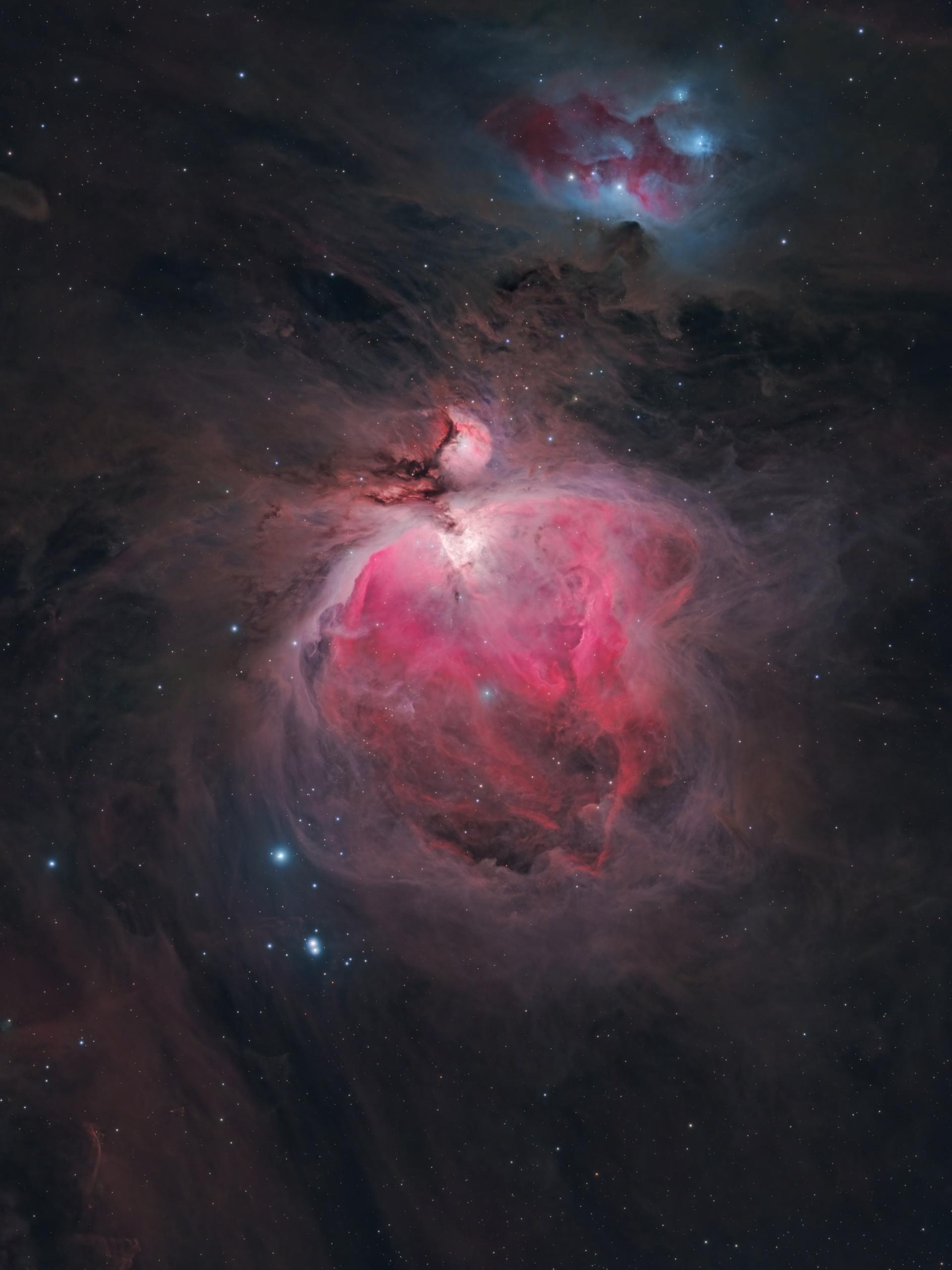
A HaRGB rendering of M42, blending multiple hydrogen and broadband datasets to hold the nebula's punishing dynamic range - bright core and faint outer wisps - in the same frame.


The object
M42, the Great Orion Nebula, is one of the brightest and most photographed objects in the sky, and one of the hardest to expose well. Its core is bright enough to burn through most single exposures long before the faint outer wisps of gas even register.
It's an object nearly every astrophotographer returns to at some point - less because it's rare, and more because it never quite looks finished.
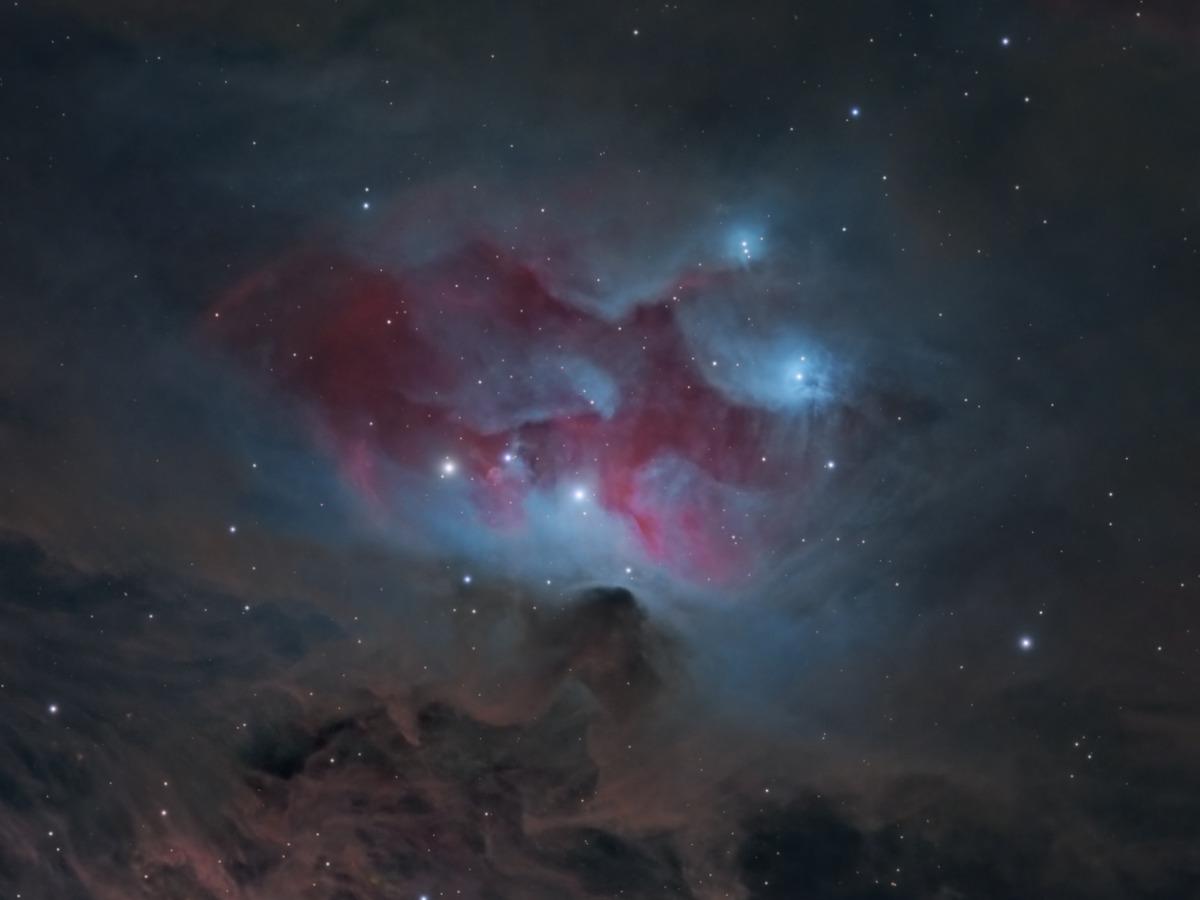
Capture notes
This one leaned on volume rather than a single dataset: three separate sets of Hα alongside two of RGB, blended together at the luminance stage through pixel math instead of a dedicated luminance channel. The red channel picked up some of that hydrogen signal too, to help hold the core together.
Processing
Processing focused on compressing that dynamic range without it looking artificial, bringing the outer nebulosity forward while keeping the core from blowing out - the blended luminance did most of that work.
This was one of the earlier captures in the set, shot on the Esprit 100ED riding a Sky-Watcher HEQ5 Pro - the same optics, an earlier stage of the setup.